

How to Read a 13F Filing (Without Getting Misled)
To read a 13F filing, open the manager’s latest 13F-HR on the SEC’s EDGAR system, sort the holdings table by value to see its biggest positions, and compare it with last quarter’s filing to spot new buys and exits. The hard part isn’t reading the numbers — it’s not being misled by them. A 13F is a stale, incomplete snapshot, and treating it as a live buy list is the single most common mistake investors make.
What a 13F filing actually contains
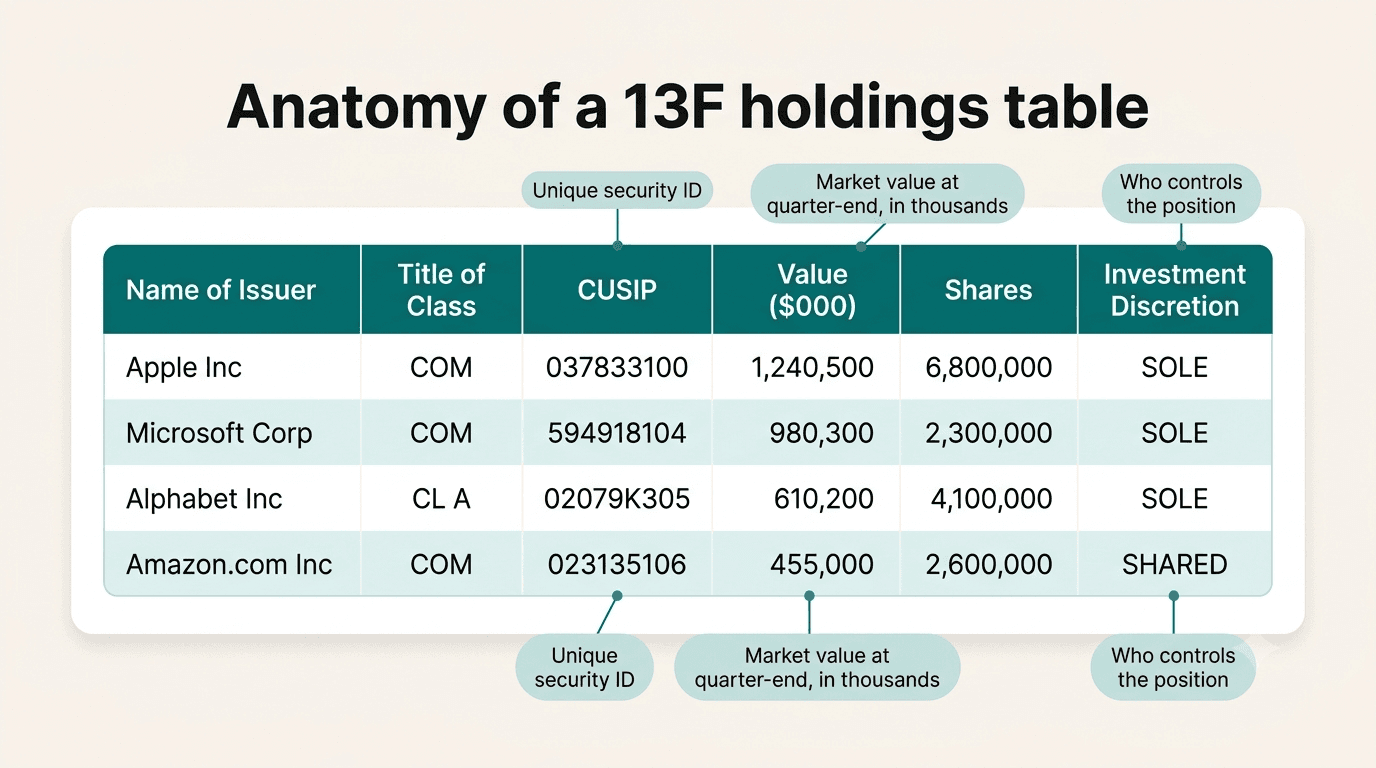
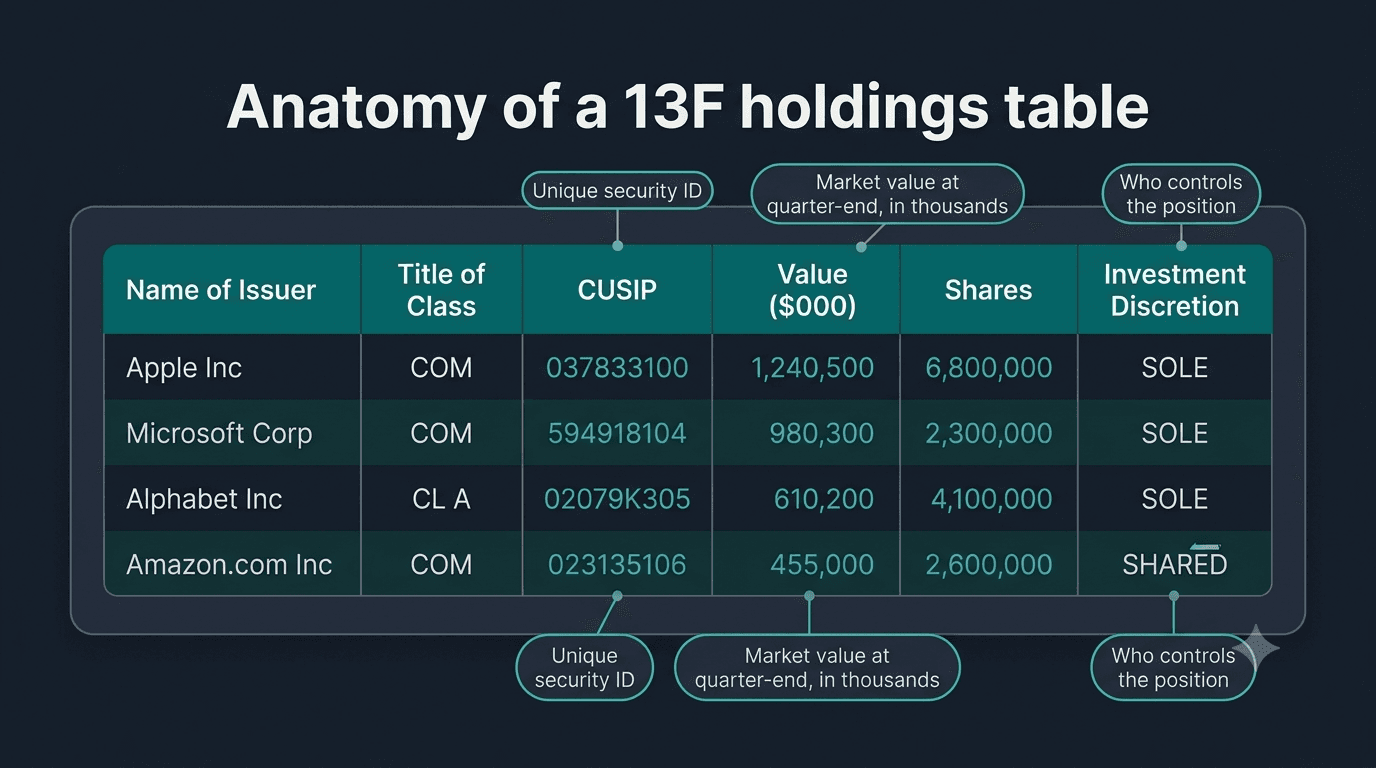
Every 13F has two parts: a cover page and a holdings table. The cover page names the manager, the quarter being reported, and any confidential-treatment requests. The holdings table is where the substance lives — one row per position, with these columns:
- Name of Issuer — the company (e.g. Apple Inc).
- Title of Class — usually common stock, but also calls, puts, or convertible notes.
- CUSIP — a nine-character ID for the exact security.
- Value — market value at quarter end, reported in thousands (not cost basis).
- Shares / Principal Amount — how many shares are held.
- Investment Discretion & Voting Authority — who controls the position and its votes.
How to read a 13F, step by step
- Find the filing. Search the manager on EDGAR and open the most recent 13F-HR. (An aggregator does this for you.)
- Sort by value. Rank positions largest-first so you see the fund’s real conviction, not an alphabetical list.
- Check position size. A holding is only meaningful relative to the portfolio — a 0.1% position isn’t a “bet,” even in a famous fund.
- Compare quarter-over-quarter. Line the current 13F up against the prior one. New positions, complete exits, and big size changes are where the signal lives.
That last step is the whole game. A single quarter’s snapshot tells you little; the change between quarters is what reveals a manager’s evolving thinking.
What a 13F doesn’t show (the traps)
A 13F is designed to mislead the careless reader — not on purpose, but by omission. Keep these limits front of mind:
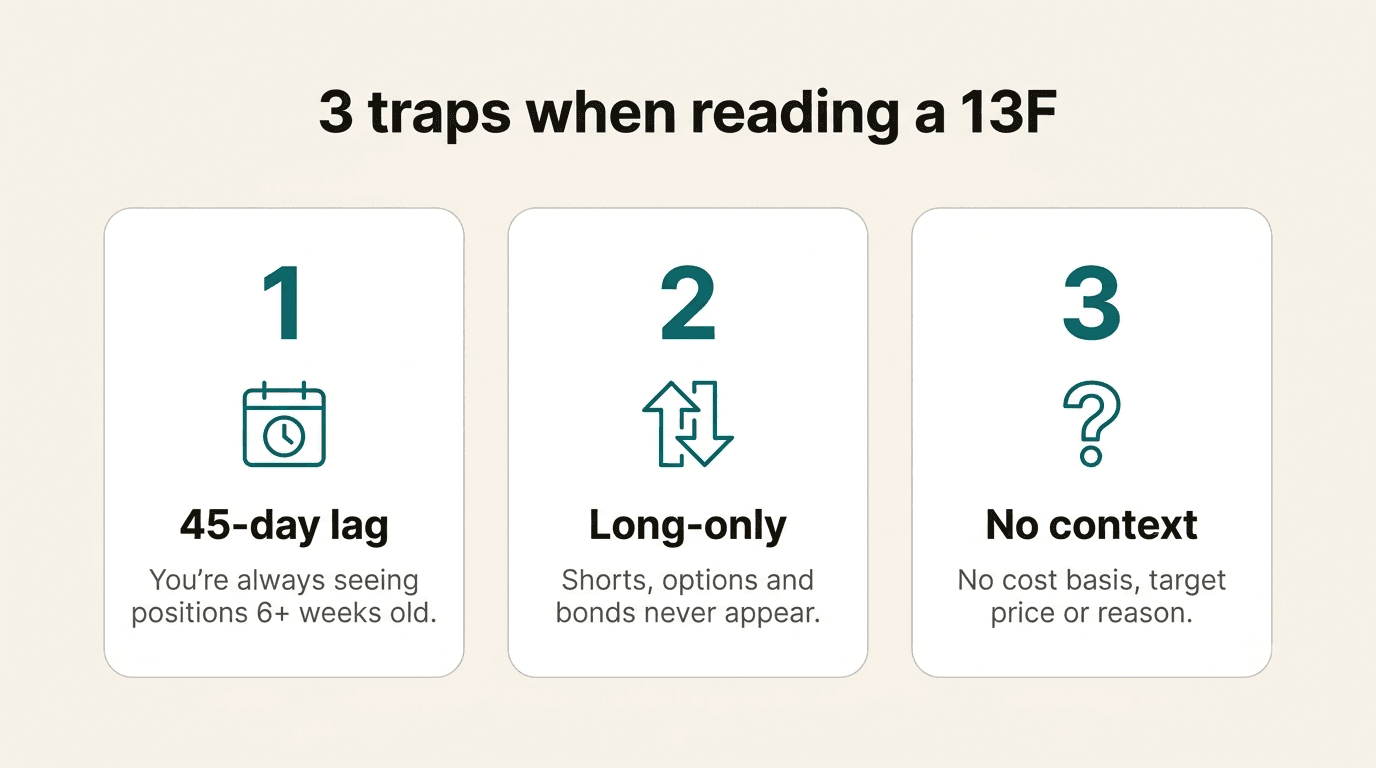
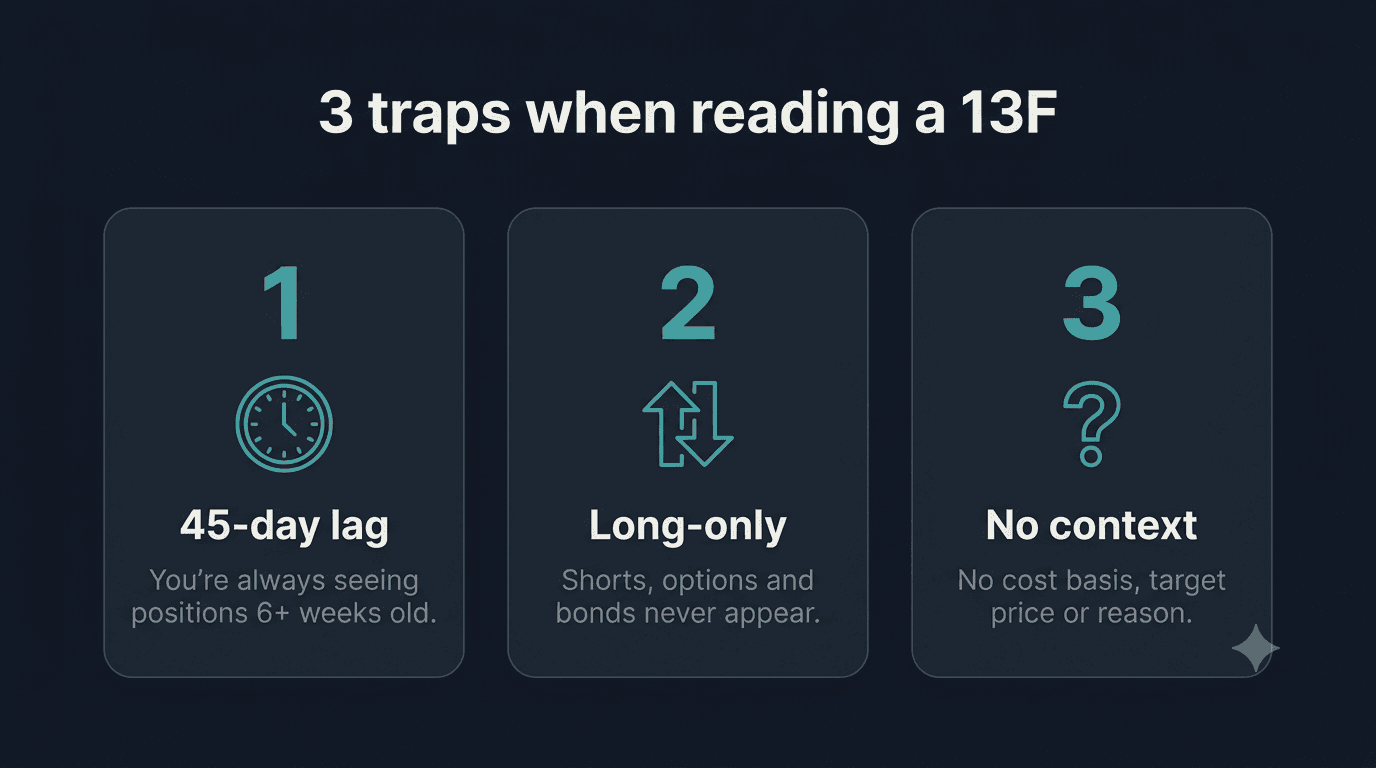
- The 45-day lag. You’re always looking at least six weeks into the past. The manager may have already sold.
- Long positions only. Shorts, options, bonds, cash, and foreign stocks never appear — so what looks like a bullish bet could be fully hedged.
- No context. There’s no cost basis, target price, or reason for the trade. Just raw positions.
- Filing errors. 13Fs are self-reported and unaudited; wrong CUSIPs and stale prices are common, so sanity-check anything surprising.
Common mistakes that mislead investors
Most 13F errors come down to reading the filing as something it isn’t:
- Treating it as a buy list. It shows where big money was, not where it’s going.
- Ignoring position size. A tiny holding in a huge fund is noise, not a signal.
- Chasing famous names. A star manager’s stale, long-only snapshot is still stale and long-only.
- Reacting to a single quarter. One filing is a data point; the trend across several is the story.
A smarter way to read 13Fs
The way to use 13Fs without getting misled is to read them in aggregate and over time: track a manager across several quarters, watch which stocks many institutional investors are buying at once, and always frame what you see as a research lead to verify — never a trade to copy. (New to the form? Start with what a 13F filing is.)
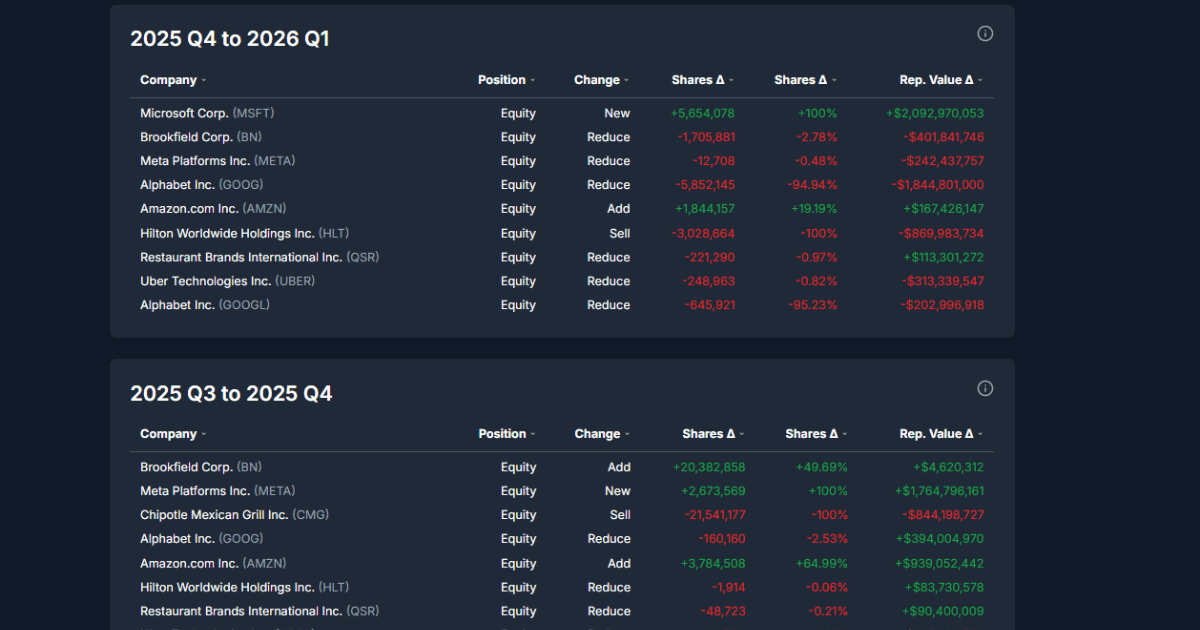
FundFollower does the tedious parts for you: it reads every 13F from EDGAR and lays out holdings, position sizes, and quarter-over-quarter changes so the signal is easy to see. Explore an investor like Berkshire Hathaway, watch new buys and sells land on the activity feed, or see the most widely held names on the most-held assets page.
Frequently asked questions
How current is the data in a 13F filing?
It's a snapshot of the last business day of the quarter, filed up to 45 days later. So when you read a 13F on May 15, you're seeing positions as of March 31 — the manager has had six-plus weeks to change them. Never treat a 13F as a real-time portfolio.
Does a 13F show a manager's entire portfolio?
No. A 13F only lists long U.S.-listed equity positions. It excludes short positions, options used as hedges, bonds, cash, commodities, and foreign-listed stocks — so a fund's real exposure can look very different from its 13F.
Can you just copy a hedge fund's 13F?
It's the most common mistake in this corner of the market. A 13F is a stale, long-only, hedge-blind snapshot with no explanation of why a position exists or what price the manager paid. Use it to generate research ideas, not as a buy list. This is not financial advice.
Where do you find 13F filings?
All 13Fs are filed on the SEC's EDGAR system for free — search the manager's name and open the latest 13F-HR. Because raw filings are tedious to parse, most people use an aggregator like FundFollower that presents the same data as a searchable portfolio with quarter-over-quarter changes.
What do the columns in a 13F mean?
The holdings table lists, for each position: Name of Issuer (the company), Title of Class (e.g. common stock), CUSIP (a security ID), Value (market value at quarter end, in thousands), Shares/Principal Amount, and Investment Discretion. Sorting by Value shows the biggest positions first.
Want to see 13F filings without the 45-day headache of raw EDGAR?
FundFollower turns every filing into a live, searchable portfolio. Browse institutional investors →