

How Do Hedge Funds Actually Make Money?
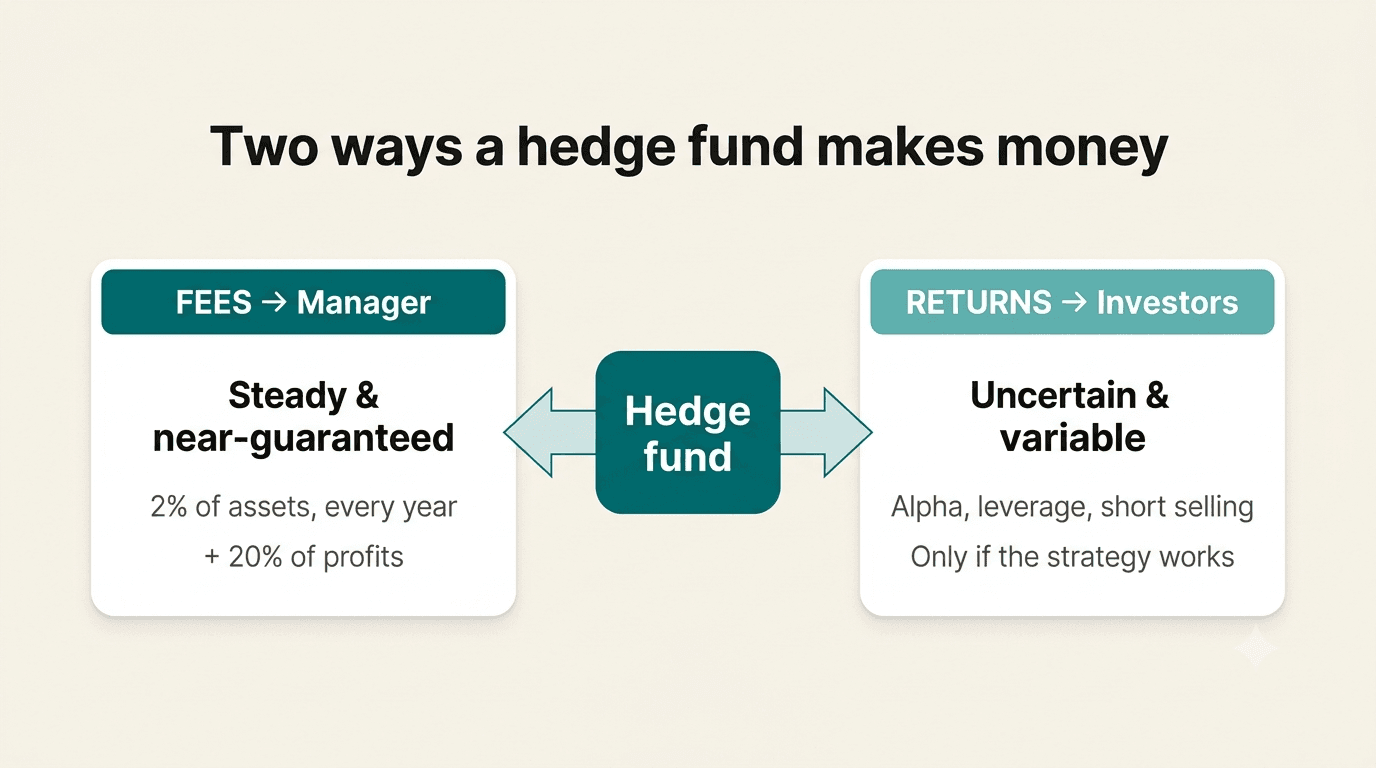
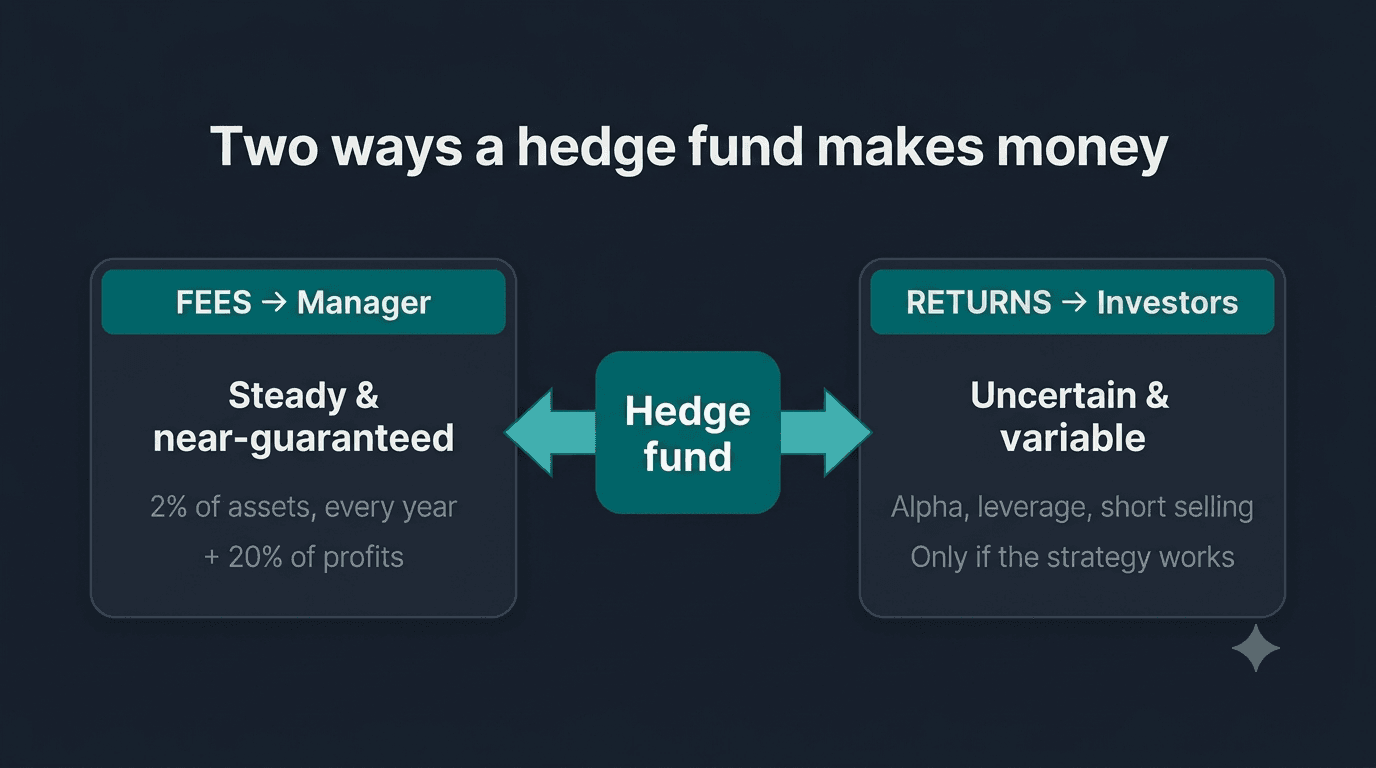
Hedge funds make money two different ways, and it pays to keep them separate. The management firm earns money from fees — the famous “2 and 20” — which it collects largely regardless of results. The fund itself makes money for investors through returns: leverage, short selling, arbitrage, and interest. The catch is that the first is far more reliable than the second.
The two sides of “making money”
When people ask how a hedge fund makes money, they usually blur two things. A hedge fund manager gets paid to run the money; investors get paid only if the strategy works. Those incentives don’t always point the same way — a manager can earn a comfortable living from fees even in a mediocre year, which is exactly why the fee structure matters so much.
How the manager makes money: fees
The classic structure is “2 and 20”, and it has two parts:
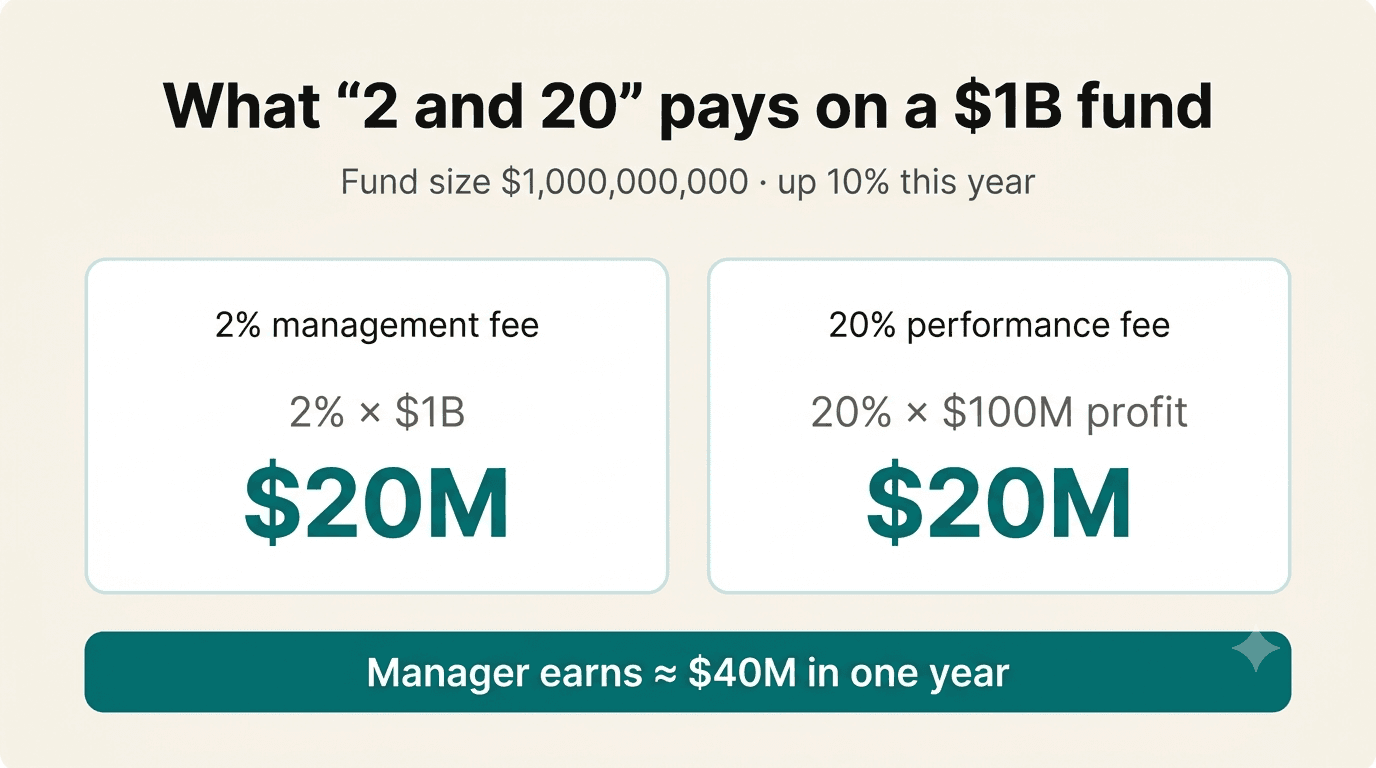
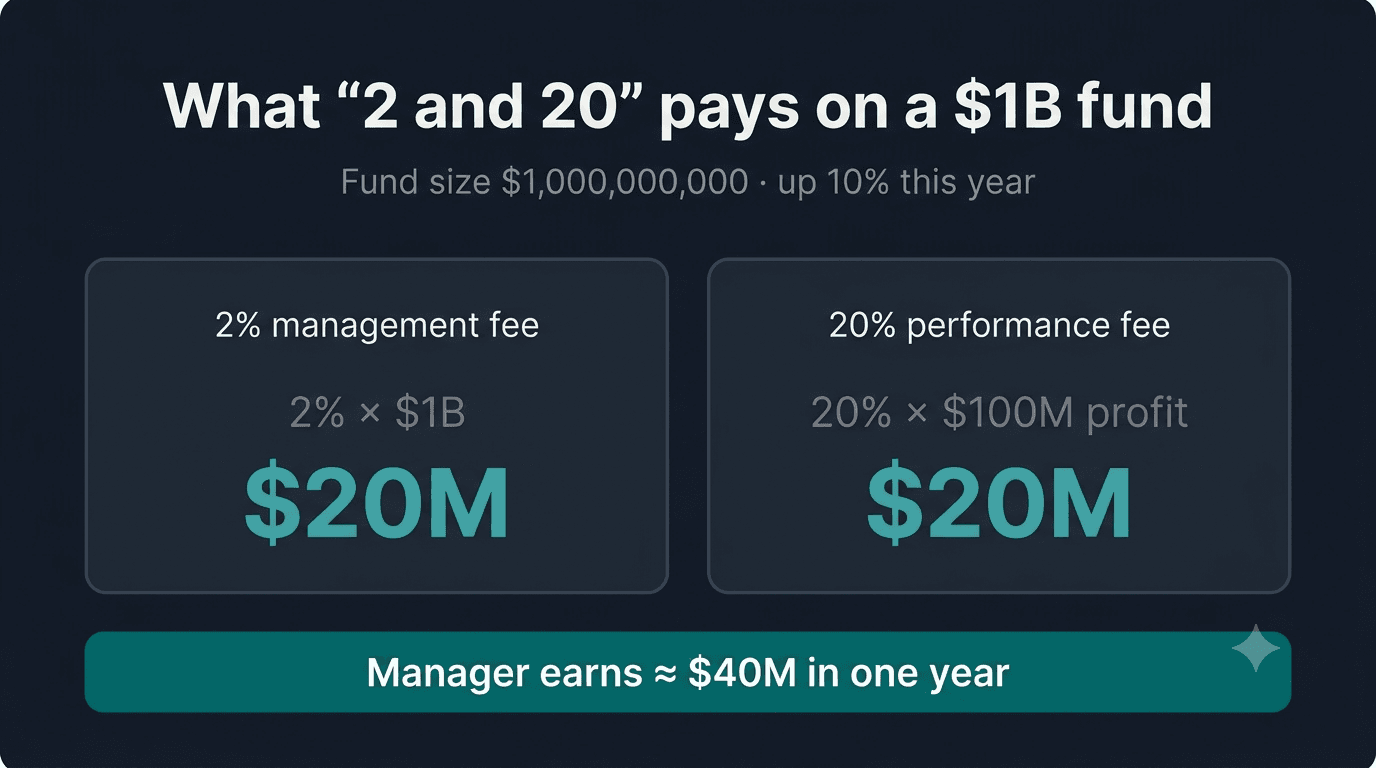
- Management fee (~2%). Charged annually on assets under management (AUM), it’s paid whether the fund wins or loses. On a large fund, this alone is a fortune.
- Performance fee (~20%). A cut of the profits — sometimes called carried interest — that rewards the manager when the fund gains.
Two guardrails temper the performance fee. A high-water mark means a manager can’t collect performance fees on the same gains twice — losses must be recouped first. A hurdle rate (used by some funds) only pays the fee on returns above a set threshold. Fees have also compressed over time, with averages now closer to 1.3% and 16%, but the core idea holds: the management fee is a near-guaranteed income stream, and the performance fee is the upside.
How the fund makes money for investors: returns
Fees are only worth paying if the fund actually generates returns. The pitch is alpha — gains above what the market (“beta”) would give you — earned through skill rather than simply riding the index. Hedge funds chase alpha with tools ordinary funds can’t use:
- Leverage. Borrowing to amplify positions, magnifying gains (and losses).
- Short selling. Profiting when a stock falls, so the fund can make money in down markets.
- Arbitrage. Exploiting small price gaps between related securities.
- Interest and income. Earning yield on cash, collateral, and fixed-income positions.
Done well, this produces absolute return — a positive result whether the broader market rises or falls. Done badly, leverage and shorting cut the other way, which is why hedge fund returns vary so wildly from one fund to the next.
Do hedge funds actually beat the market?
On average, no. After fees, most hedge funds have underperformed a simple S&P 500 index fund over the long run — the fee drag is hard to overcome, and a fund charging 20% of profits has to be exceptional just to match a cheap benchmark. The famous exceptions, like Renaissance Technologies’ Medallion Fund, are rare enough that they prove the rule.
So why do investors pay up? Because many hedge funds aren’t really selling raw outperformance. They’re selling diversification and downside protection — returns that don’t move in lockstep with stocks, and a cushion when markets fall. Whether that’s worth the fees depends entirely on the fund. None of this is financial advice.
How to see what hedge funds are actually holding
You can’t see a fund’s fees or its shorts, but you can see its long U.S. stock positions. Managers with over $100 million in equities must disclose those holdings every quarter in a 13F filing — a public window into where the money actually went.
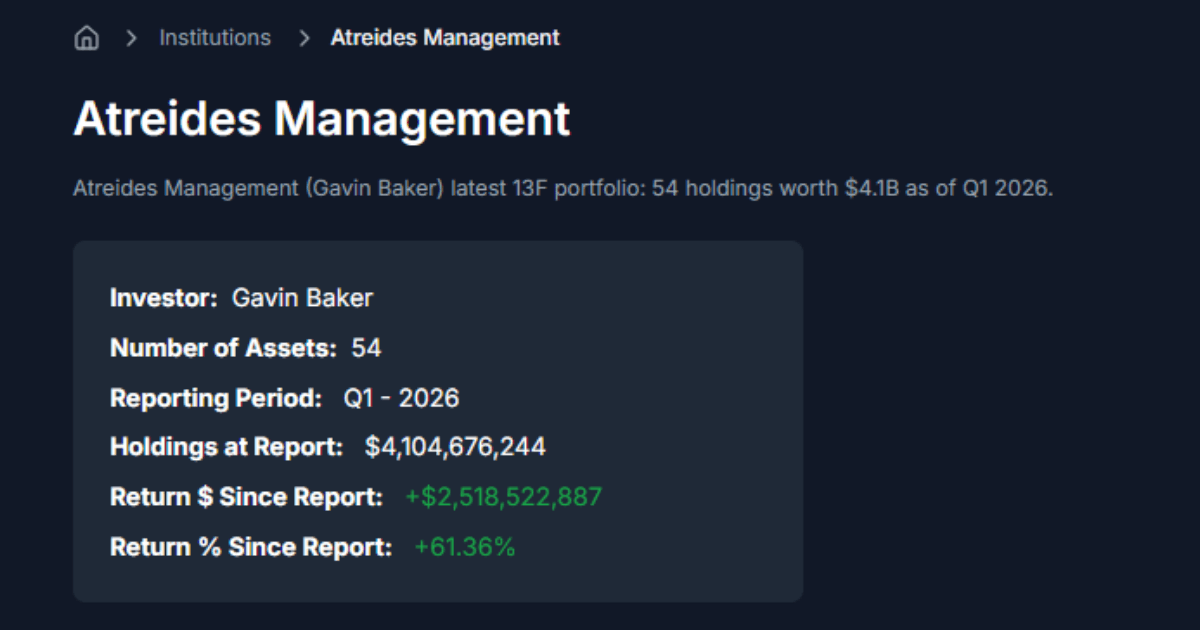
FundFollower parses those filings into clean portfolios, so you can track what the biggest managers are buying and how their disclosed positions have performed. Browse the institutions directory, dig into a fund like Atreides Management, or see the most widely held names on the most-held assets page.
Frequently asked questions
How much do hedge fund managers make?
It depends on assets and performance, but the model is lucrative. On a $1 billion fund charging '2 and 20' that returns 10%, the manager collects roughly $20 million in management fees plus about $20 million in performance fees — $40 million in a single year. Top managers at the largest funds earn far more.
Do hedge fund managers still get paid if the fund loses money?
Yes — the management fee (around 1–2% of assets) is charged regardless of performance, so managers earn something even in a bad year. They only miss the performance fee, and a high-water mark means they can't collect it again until the fund recovers past losses.
Do hedge funds beat the market?
On average, no. After their high fees, most hedge funds have underperformed a simple S&P 500 index fund over the long run. A handful — like Renaissance Technologies' Medallion Fund — have crushed the market, but they're rare exceptions. Many funds sell diversification and downside protection rather than raw outperformance.
How do hedge funds make money when markets fall?
Through short selling, derivatives, and hedges. By betting against overvalued stocks or buying protection, a hedge fund can profit — or at least lose less — when markets drop. That ability to make 'absolute' returns in any direction is a core part of the pitch.
What is '2 and 20'?
It's the classic hedge fund fee structure: a 2% annual management fee on assets under management plus a 20% performance fee on profits. Many funds now charge less, and performance fees are usually gated by a high-water mark and sometimes a hurdle rate.
Want to see 13F filings without the 45-day headache of raw EDGAR?
FundFollower turns every filing into a live, searchable portfolio. Browse institutional investors →